
The rising goods and services tax (GST) and personal income-tax collections may bolster the Narendra Modi government's ability to announce new schemes or enhance existing ones.

'After exiting jail, I thought some of my IIM-A classmates would contact me. None did.' 'The case indeed scared people, which perhaps was the objective of the State.'

The Indian basket represents the price of Oman and Dubai sour grade crude.

Movement of prices in international oil market and rupee-USD exchange rate will be monitored

The Tata group companies are now more valuable than all the listed central public sector undertakings (CPSUs) or companies in the country. The key 20 listed Tata companies ended the 2021 calendar year with a combined market capitalisation of Rs 23.36 trillion, ahead of the 70 listed CPSUs, which had a combined m-cap of Rs 23.2 trillion. In comparison, these CPSUs had a combined market capitalisation of Rs 16.7 trillion at the end of December 2020 against the Tata group firms' combined m-cap of Rs 15.7 trillion.

"Financial bids for Air India disinvestment received by Transaction Adviser. Process now moves to concluding stage," DIPAM Secretary Tuhin Kanta Pandey tweeted.

Aviation turbine fuel to now cost more.
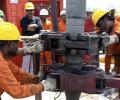
Upstream firms have a tremendous financial pressure due to selling crude at subsidised rates to oil marketing firms.

'What has taken the government so long to understand what the people of this country are going through?'
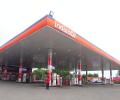
This is the first time that petrol sales in the world's third-largest oil importer have risen since the March 25 nationwide lockdown crippled economic activity and sent demand plummeting.

Jet fuel (ATF) prices have been hiked by a steep 6.9 per cent, taking the rates to lifetime high of Rs 75,031 per kilolitre.
While presenting her 2021-22 Union Budget, Finance Minister Nirmala Sitharaman had set a fiscal deficit target of 6.8 per cent of nominal gross domestic product (GDP) against the 2020-21 Revised Estimate of 9.5 per cent. The fiscal correction in the upcoming 2022-23 Union Budget is unlikely to be that steep. Even as discussions among top Budget-makers are ongoing, the fiscal deficit target for 2022-23 may likely be in the range of 6.5-6.8 per cent.

If the fiscal deficit for the year can be maintained at Rs 7.04 trillion, the deficit as a percentage of GDP will slip to 3.44 per cent
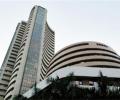
The market breadth in BSE remains healthy with 1,829 shares advancing and 721 shares declining

Suryakumay Yadav has become the toast of Indian cricket
Though the NDA government had been trying to privatise 20 companies, a decision for which was taken in 2017, and included national carrier Air India, the investor community evinced little enthusiasm for any of them. Now, with an in-principle approval for privatisation of BPCL, CCI and SCI, the government has taken the plunge again.

The government allocated Rs 650 billion for petroleum subsidies in FY14, of which Rs 450 billion was used to pay oil marketing companies for the subsidy gap incurred in the previous financial year.
While LPG price was raised by Rs 18, kerosene saw a hike of Rs 3 per litre

Union Minister of Road Transport and Highways Nitin Gadkari on Tuesday unveiled the prototype of the world's first Bharat Stage (BS)-VI-compliant electrified flex-fuel car, developed by Toyota Kirloskar Motor. The car, which runs on 100 per cent ethanol (E100), is based on the Toyota Innova HyCross. It can cover 40 per cent of its distance on ethanol and the remaining 60 per cent on electric, with the petrol engine shut off.

Yoga was the mantra and asanas the discipline on Wednesday as millions across the globe and distant corners of India stretched for the skies and dived for their toes, breathed in and out -- mindfully -- and twisted and turned to celebrate the International Day of Yoga.

Petrol prices were on Wednesday hiked by Rs 3.07.

These stocks offer the best combination of maximum 'buy' recommendations from brokerages and share price upside over the next 12 months.

Oil companies on Monday slashed petrol price by Rs 3.02 per litre.

"This is a big scam. The country is being looted. Please allow us to speak," Congress leader in Lok Sabha Adhir Ranjan Chowdhury said.
The government cleared the proposal despite opposition from the petroleum ministry, which says this is not the right time for divestment as the sector is moving from trade parity to export parity pricing.
Fuel rates were last revised on February 1 when petrol price was cut by a marginal 4 paise a litre.

In 16 days, petrol price has been hiked by Rs 8.3 per litre and diesel by Rs 9.46 - a record increase in rates of the fuel in any fortnight since pricing was deregulated in April 2002.

One of the reasons is that the retail prices are not bench-marked to crude but their respective international benchmark prices.

According to industry figures, the pre-Covid demand for liquid medical oxygen (LMO) before the pandemic was 700 tonnes per day across the country. Now, with the second wave, the demand has gone up more than seven times, reports Jyoti Mukul.
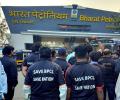
US private equity firm I Squared Capital is dropping out of the race to buy India's second-largest state oil firm, Bharat Petroleum Corporation Ltd (BPCL) owing to a complex deal structure and lack of financial backers for the transaction, sources said. I Squared Capital through its Indian arm, Think Gas was among the three suitors that had evinced interest in buying the government's near 53 per cent shareholding in BPCL. "The company has made a decision not to participate in the financial bidding," a source with direct knowledge of the development said.

In the year to date, 61 PSUs have lost an average of 22 per cent, with five companies losing more than half their share value. The BSE PSU index is down 10.6 per cent.

The ethanol vehicles will have the flexibility to switch to other fuels

Finance Minister Nirmala Sitharaman's Budget speech on Wednesday was marked by the usual thumping of benches by the ruling alliance members, but the loudest cheer was reserved for her announcement of income tax relief, which was welcomed by 'Modi, Modi' chants in Lok Sabha that also witnessed a few instances of protest by the Opposition.

Not surprisingly, equity investors are bidding-up stock prices across sectors and the broader market is now more valuable than pre-Covid levels.
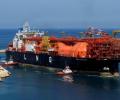
Majority of PLL's long-term deals are linked to crude, which faces price challenge from other fuels. Spot LNG is moving away from this linkage, which puts a question mark on crude linked contracts.

10 stocks which are most popular with brokerages right now and are expected to deliver maximum upside over the next 12 months.
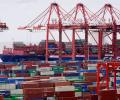
The country's exports for the first time crossed the $400 billion mark in a fiscal on healthy performance by sectors such as petroleum products, engineering, gems and jewellery, and chemicals, according to the commerce ministry's data released on Wednesday. The merchandise exports rose by by 37 per cent to $400.8 billion in 2021-22 until March 21 against $292 billion in 2020-21. Previously, the outbound shipments had touched a record of $330.07 billion in 2018-19.

In Mumbai, jet fuel costs Rs 71,940.36 per kl as against Rs 73,306.89 per kl previously, IOC said.
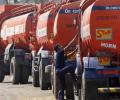
IOC said the daily price revision is an initiative for ensuring the best possible prices to the customers as well as improved transparency on the pricing mechanism.

Aviation Turbine Fuel, or ATF, price at Delhi was cut by Rs 3,025.34 per kilolitre, or 4 per cent, to Rs 71,800.21 per kl, according to Indian Oil Corp, the nation's largest fuel retailer.
